


 Last updated on September 29, 2026
 IV fluids treat clinically significant dehydration by delivering water and electrolytes directly into a vein. Normal saline and balanced crystalloids are common options, but the best IV fluid depends on the dehydration cause, electrolyte levels, acid-base balance, medical history, and treatment goal.
Dehydration occurs when fluid loss exceeds fluid intake. Vomiting, diarrhea, fever, heat exposure, exercise, alcohol use, and poor oral intake are common causes. Mild dehydration often responds to oral fluids. More significant dehydration requires medical assessment when a person cannot drink, cannot retain fluids, or develops signs of poor circulation.
At Manhattan IV Therapy, IV hydration treatment focuses on replacing fluids and electrolytes when hydration needs require intravenous support. The appropriate IV solution depends on the individual’s symptoms, health history, and the reason fluid replacement is needed.
What Are IV Fluids for Dehydration?
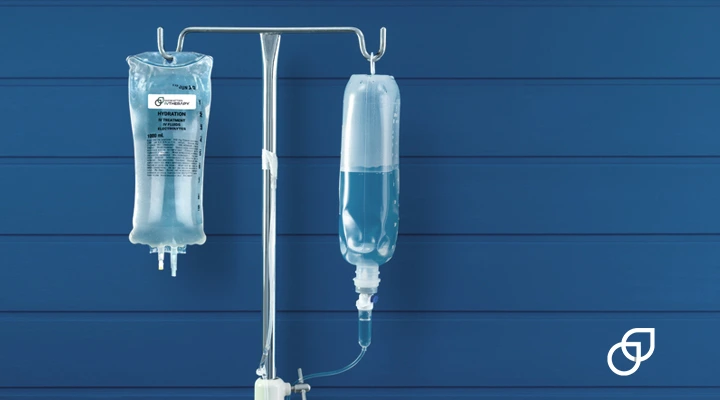
IV fluids for dehydration are sterile solutions that replace water, circulating volume, and selected electrolytes through a vein. Normal saline, Lactated Ringer’s, Plasma-Lyte, dextrose-containing solutions, and half-normal saline have different compositions, indications, and limitations.
An intravenous catheter delivers the prescribed solution into the bloodstream. This route bypasses gastrointestinal absorption, which is useful when vomiting, illness, or altered mental status prevents adequate oral intake.
The primary purposes of IV fluid therapy include:
- Resuscitation: Restores circulating volume during hypovolemia or unstable blood pressure.
- Replacement: Corrects an existing fluid and electrolyte deficit.
- Maintenance: Supplies daily fluid requirements when oral intake remains inadequate.
A stable outpatient receiving hydration requires a different treatment plan from a hospitalized patient with shock, blood loss, diabetic ketoacidosis, severe infection, or a major electrolyte disorder.
The selection of IV fluids depends on the type and severity of dehydration. IV Hydration Therapy uses fluid replacement to support hydration when oral intake is not enough or when direct administration is clinically appropriate.
How Do IV Fluids Rehydrate Your Body?
IV fluids rehydrate the body by restoring extracellular fluid and supporting circulating blood volume. This process improves tissue perfusion, blood pressure, kidney filtration, urine production, and the transport of oxygen, nutrients, electrolytes, and metabolic waste.
Significant dehydration reduces fluid within the extracellular compartment. The resulting decline in circulating volume can limit blood flow to the kidneys, brain, muscles, skin, and other tissues.
Isotonic crystalloids distribute throughout the extracellular compartment. A portion remains inside the blood vessels, while the remainder enters the interstitial space surrounding the cells.
IV fluids correct fluid loss, but they do not automatically treat the cause. Food poisoning, persistent vomiting, uncontrolled diabetes, infection, heat illness, and medication-related fluid loss still require cause-specific evaluation.
The type of fluid replacement depends on what the body loses. For example, dehydration caused by gastrointestinal illness may involve different electrolyte changes compared with dehydration caused by sweating or heat exposure.
What Are the Best IV Fluids for Dehydration?
The best IV fluids for dehydration are isotonic crystalloids such as normal saline, Lactated Ringer’s, or Plasma-Lyte. No fluid is universally best because the appropriate choice depends on fluid losses, electrolytes, acid-base balance, glucose, kidney function, heart function, and treatment setting.
A randomized trial of 13,347 noncritically ill adults receiving treatment in an emergency department reports the same median number of hospital-free days with balanced crystalloids and saline: 25 days in each group. Major adverse kidney events occur in 4.7% of the balanced-crystalloid group and 5.6% of the saline group. The absolute difference is 0.9 percentage points, so the result does not establish one universal fluid for every dehydration patient.
1. Normal Saline
Normal saline is an isotonic crystalloid containing 0.9% sodium chloride. It replaces extracellular fluid, sodium, and chloride and is commonly used when dehydration involves volume loss or chloride depletion.
One liter of normal saline contains approximately 154 mmol of sodium and 154 mmol of chloride. It does not contain potassium, calcium, magnesium, glucose, or a buffer.
Clinicians consider normal saline for conditions involving extracellular fluid depletion, including selected cases of vomiting, fluid loss, low circulating volume, and dehydration requiring sodium and chloride replacement.
Normal saline has a higher chloride concentration compared with human plasma. Larger administered volumes can increase chloride levels and affect bicarbonate concentration.
The SALT-ED trial reports that patients receiving saline develop higher chloride and lower bicarbonate concentrations than patients receiving balanced crystalloids. The clinical significance depends on the administered volume and patient condition.
This does not mean that normal saline is unsafe for every patient. The appropriate choice depends on the amount needed, the patient’s medical condition, and treatment goals.
2. Lactated Ringer’s
Lactated Ringer’s is a balanced crystalloid containing sodium, chloride, potassium, calcium, and sodium lactate. Lactate acts as a buffer precursor after metabolism. Clinicians use Lactated Ringer’s for volume replacement in selected patients with gastrointestinal losses, burns, trauma, surgery, sepsis, or extracellular-volume depletion. Its chloride concentration is lower than that of normal saline.
Lactated Ringer’s does not correct every electrolyte deficiency. Its potassium content is too low to serve as dedicated potassium-replacement treatment. Its calcium content also affects compatibility with selected medications and blood products.
The term “lactated” refers to sodium lactate. It does not mean that the solution contains milk, dairy, or lactose.
3. Plasma-Lyte and Other Balanced Crystalloids
Plasma-Lyte is a balanced crystalloid containing sodium, chloride, potassium, magnesium, acetate, and gluconate. It is used when fluid replacement is needed and a lower chloride load is preferred.
The composition differs from Lactated Ringer’s. Large clinical trials often group Lactated Ringer’s and Plasma-Lyte together as balanced crystalloids when comparing them with saline.
This distinction matters because evidence supporting balanced crystalloids as a category does not prove that every balanced solution produces identical outcomes.
The appropriate choice depends on:
- Fluid requirements
- Electrolyte values
- Kidney function
- Acid-base status
- Treatment setting
4. Dextrose-Containing IV Fluids
Dextrose-containing IV fluids provide glucose with water or electrolytes. Their purpose depends on the complete formulation and the patient’s clinical needs.
D5W contains 5% dextrose in water. Although it is isotonic inside the IV bag, glucose metabolism leaves proportionally more free water in the body.
D5W does not remain primarily within the bloodstream and is not generally used as the first option for restoring circulating volume during significant dehydration.
Dextrose-containing saline solutions combine glucose with sodium chloride and may be used for selected glucose, maintenance, and electrolyte requirements.
An “energy boost” alone is not a medical indication for selecting a dextrose-containing IV fluid. The formulation should match the patient’s clinical situation.
Is Normal Saline or Lactated Ringer’s Better for Dehydration?
Normal saline and Lactated Ringer’s both replace extracellular fluid, but neither is better for every patient. Normal saline supplies sodium and chloride, while Lactated Ringer’s provides a more balanced electrolyte composition with a buffer precursor and lower chloride exposure.
| Attribute | Normal Saline | Lactated Ringer’s |
|---|---|---|
| Fluid class | Isotonic crystalloid | Balanced crystalloid |
| Sodium | Approximately 154 mmol/L | Approximately 130 mmol/L |
| Chloride | Approximately 154 mmol/L | Approximately 109 mmol/L |
| Potassium | None | Approximately 4 mmol/L |
| Calcium | None | Approximately 1.5 mmol/L |
| Buffer precursor | None | Lactate |
| Main consideration | Sodium and chloride replacement | Balanced volume replacement |
| Important limitation | Higher chloride load | Calcium and lower sodium affect selected uses |
The SMART trial includes 15,802 critically ill adults. Major adverse kidney events occur in 14.3% of patients receiving balanced crystalloids and 15.4% receiving saline. Thirty-day in-hospital mortality is 10.3% with balanced crystalloids and 11.1% with saline.
These findings apply to critically ill hospital patients. They support a small average difference in composite kidney outcomes but do not prove that Lactated Ringer’s is better for every person with dehydration.
Which IV Fluid Is Used for Different Causes of Dehydration?
Different dehydration causes produce different water, electrolyte, and acid-base losses. Isotonic crystalloids treat many extracellular fluid deficits, but vomiting, diarrhea, heat exposure, diabetes, alcohol use, kidney disease, and heart disease require different evaluation and monitoring.
The selected IV fluid depends on what the body loses and the patient’s ability to restore those losses through oral intake. A person with mild dehydration after exercise requires a different approach from someone with persistent vomiting, severe diarrhea, heat illness, or an underlying medical condition.
Vomiting and Diarrhea
Normal saline or balanced crystalloids can replace extracellular fluid losses caused by vomiting or diarrhea when IV treatment is appropriate. The selected solution depends on electrolyte losses, acid-base changes, dehydration severity, and whether oral hydration remains possible.
Vomiting commonly causes loss of water, sodium, chloride, and hydrogen ions. Persistent vomiting can contribute to chloride depletion and metabolic alkalosis.
Diarrhea can result in the loss of water, sodium, potassium, and bicarbonate. The electrolyte pattern depends on the duration, severity, and cause of diarrhea.
Oral rehydration remains appropriate when a person can drink, retain fluids, and does not show signs of significant dehydration. IV fluids become more relevant when vomiting prevents drinking, fluid losses continue, or circulation becomes affected.
Food Poisoning
IV fluids can restore hydration during food poisoning when vomiting, diarrhea, or poor oral intake causes significant fluid loss. The selected IV solution depends on electrolyte changes, symptom severity, and the patient’s ability to maintain hydration.
Food poisoning can cause rapid fluid loss through repeated vomiting and diarrhea. In these cases, dehydration can develop faster because the body loses both water and electrolytes.
When gastrointestinal symptoms contribute to dehydration, Food Poisoning IV Therapy may provide fluid replacement and supportive treatment after appropriate assessment.
IV fluids replace lost volume but do not treat every cause of food poisoning. Bacterial infections, viral illnesses, contaminated food exposure, medication effects, or other gastrointestinal conditions may require additional medical evaluation.
Symptoms that require medical attention include:
- Blood in vomit or stool
- Severe abdominal pain
- Persistent vomiting
- Confusion
- High fever
- Signs of severe dehydration
- Inability to keep fluids down
Heat-Related Dehydration
An isotonic crystalloid can treat clinically significant dehydration caused by heat exposure and excessive sweating. Treatment depends on temperature, electrolyte levels, blood pressure, mental status, and the severity of fluid loss.
New York City heat exposure can increase dehydration risk, especially during prolonged outdoor activity, exercise, commuting, or work in warm environments.
Sweating removes water and electrolytes, mainly sodium. The amount lost varies depending on:
- Temperature and humidity
- Exercise intensity
- Duration of activity
- Clothing
- Individual sweat rate
- Acclimatization
Mild heat-related dehydration often improves with cooling, rest, water, and electrolyte replacement. More significant dehydration may require IV fluids when oral hydration cannot replace losses.
Heatstroke is different from simple dehydration. Confusion, seizures, collapse, altered mental status, or extremely high body temperature require emergency treatment rather than routine hydration therapy.
Heavy Exercise or Sweating
Most exercise-related dehydration improves with water, electrolytes, food, and rest. IV fluids are considered when fluid loss is significant, oral replacement is inadequate, or symptoms suggest more than routine post-workout dehydration.
Exercise increases fluid requirements because sweating removes water from the body. Long-distance running, endurance training, cycling, intense workouts, and outdoor exercise can produce greater fluid losses.
Sweat composition varies between individuals. Some people lose more sodium through sweat than others, which affects hydration needs.
For athletes or active individuals experiencing significant fluid loss after intense activity, Performance Recovery IV Therapy combines hydration support with ingredients selected for post-exercise recovery goals.
A normal workout does not automatically require IV fluids. Drinking enough water, replacing electrolytes when needed, eating properly, and allowing recovery time remain effective approaches for most exercise-related fluid loss.
Hangover-Related Dehydration
IV fluids may help replace fluid when alcohol-related dehydration is present, but they do not remove alcohol from the body or speed up alcohol metabolism. Hangover symptoms can involve dehydration, sleep disruption, stomach irritation, inflammation, and alcohol metabolism.
Alcohol can contribute to dehydration by increasing urine production and reducing normal hydration habits. Vomiting, reduced food intake, and poor sleep can further affect fluid balance.
When dehydration contributes to symptoms after alcohol use, a hangover IV may provide fluid replacement based on the patient’s condition and treatment needs.
IV fluids do not:
- Lower blood alcohol levels
- Reverse alcohol effects
- Eliminate hangover symptoms instantly
- Replace sleep
The body still requires time to metabolize alcohol. Hydration support addresses fluid loss but does not change alcohol processing speed.
Dehydration From Fever, Cold, or Flu
IV fluids can help replace hydration losses caused by fever, sweating, vomiting, reduced intake, or illness-related fluid loss. The underlying infection determines whether additional treatment or medical evaluation is required.
Fever increases fluid loss because the body uses more water for temperature regulation. Respiratory illnesses can also reduce hydration when symptoms affect appetite, drinking, or energy levels.
Conditions such as seasonal cold and flu symptoms may contribute to dehydration when a person has fever, poor fluid intake, or difficulty maintaining hydration.
Mild dehydration during illness often improves with oral fluids. Medical evaluation becomes important when someone experiences:
- Trouble breathing
- Chest pain
- Confusion
- Severe weakness
- Persistent vomiting
- Inability to retain liquids
- Signs of worsening dehydration
Which IV Fluid Is Used When You Cannot Drink Enough Water?
An isotonic crystalloid commonly provides initial fluid replacement when oral intake cannot meet the body’s needs. The cause of poor intake determines whether additional electrolytes, glucose, medication, laboratory testing, or hospital care are necessary.
People may struggle to maintain hydration because of:
- Persistent vomiting
- Severe diarrhea
- Gastrointestinal illness
- Altered mental status
- Severe weakness
- Difficulty swallowing
- Medical procedures
IV fluids bypass the digestive system and deliver fluid directly into circulation. However, the reason someone cannot drink remains important because dehydration may be a symptom of another medical condition.
Treatment continues only until oral or enteral hydration can safely meet fluid requirements.
What Are the Signs You May Need IV Fluids for Dehydration?
Signs that may require IV-fluid assessment include persistent vomiting, inability to drink, very low urine output, rapid heartbeat, low blood pressure, fainting, confusion, severe weakness, and dehydration that does not improve with oral fluids. No single symptom determines whether IV treatment is necessary.
Common dehydration symptoms include:
- Increased thirst
- Dry mouth
- Dark urine
- Reduced urination
- Headache
- Fatigue
- Dizziness
- Muscle weakness
- Rapid heartbeat
These symptoms can range from mild to severe depending on the amount of fluid lost and the underlying cause.
Signs of More Significant Dehydration
More serious dehydration can affect circulation, kidney function, and mental status.
Warning signs include:
- Confusion
- Fainting
- Minimal or absent urine
- Inability to retain fluids
- Rapid breathing
- Low blood pressure
- Severe weakness
- Signs of poor circulation
A healthcare provider evaluates the combination of symptoms, duration, cause, vital signs, and ability to drink before recommending IV fluids.
When Does Dehydration Require Emergency Medical Care?
Dehydration requires emergency medical care when it causes confusion, collapse, seizures, absent urination, severe weakness, breathing difficulty, unstable blood pressure, uncontrolled vomiting, heatstroke, major blood loss, suspected diabetic ketoacidosis, or signs of organ dysfunction.
Emergency evaluation is appropriate when dehydration occurs with:
- Bloody vomit or stool
- Severe abdominal pain
- Chest pain
- Severe headache with neurological symptoms
- High fever with altered mental status
- Rapid deterioration
- Severe dehydration in an infant or older adult
- Uncontrolled diabetes
- Significant fluid loss with kidney or heart disease
IV fluids can replace lost volume, but emergency conditions require diagnosis and treatment of the underlying problem.
Are Oral Rehydration Solutions or IV Fluids Better for Dehydration?
Oral rehydration is preferred for mild-to-moderate dehydration when a person can drink and retain fluids. IV fluids are used when oral intake fails, vomiting prevents adequate replacement, dehydration is severe, circulation is affected, or controlled fluid and electrolyte correction is required.
Oral fluids remain the first option for many dehydration cases because they are effective, accessible, and do not require intravenous access.
Oral rehydration solutions contain water, glucose, and electrolytes in specific proportions that support intestinal absorption. They are especially useful when dehydration occurs from conditions such as diarrhea, vomiting, or increased fluid loss.
IV fluids become more relevant when:
- A person cannot keep fluids down
- Vomiting prevents adequate hydration
- Fluid loss exceeds oral replacement ability
- Circulation is affected
- Electrolyte correction requires medical monitoring
IV therapy does not automatically provide a better outcome than oral hydration. The appropriate approach depends on the severity, cause, and individual health factors.
How Much IV Fluid Do You Need for Dehydration?
The amount of IV fluid needed for dehydration depends on body weight, fluid deficit, ongoing losses, blood pressure, urine output, kidney function, heart function, laboratory values, and response to treatment. There is no universal IV volume that treats every dehydration case safely.
Healthcare providers consider several components when determining fluid requirements:
- Initial fluid replacement: Addresses immediate circulation and volume needs.
- Existing fluid deficit: Replaces fluid already lost.
- Daily maintenance needs: Supports normal physiological requirements.
- Ongoing losses: Replaces continued losses from vomiting, diarrhea, sweating, fever, or other causes.
A healthy adult with mild dehydration has different fluid needs from a person with heart failure, kidney disease, severe infection, diabetic ketoacidosis, or major fluid loss.
The goal is not to provide the maximum amount of fluid. The goal is to restore hydration while avoiding complications from excessive fluid administration.
How Many IV Bags Are Needed for Dehydration?
There is no standard number of IV bags required for dehydration. An IV bag is a container size, not a treatment measurement. The appropriate volume depends on the patient’s condition, fluid deficit, medical history, and response during treatment.
Common IV fluid bags contain:
- 500 milliliters
- 1,000 milliliters (1 liter)
However, the number of bags does not determine whether dehydration has been corrected.
A person with mild dehydration may require a different amount compared with someone experiencing severe vomiting, diarrhea, heat illness, or medical conditions affecting fluid balance.
Factors that influence fluid volume include:
- Age
- Body size
- Severity of dehydration
- Kidney function
- Heart function
- Electrolyte levels
- Ongoing fluid losses
- Ability to drink afterward
Reassessment during treatment helps determine whether additional fluids are needed.
How Long Does an IV for Dehydration Take?
A dehydration IV commonly takes about 45–60 minutes, but total appointment time depends on assessment, IV placement, fluid volume, infusion rate, monitoring, and the patient’s response.
The infusion time varies based on:
- Type of IV fluid
- Amount administered
- Rate of infusion
- Vein access
- Medical history
- Reason for dehydration
A person receiving outpatient hydration has a different treatment process from someone requiring emergency fluid resuscitation.
Rapid fluid administration is not always better. Patients with kidney disease, heart conditions, advanced age, or electrolyte abnormalities may require slower administration and closer monitoring.
How Quickly Do IV Fluids Start Working for Dehydration?
IV fluids begin entering circulation immediately after administration starts, but symptom improvement depends on the severity of dehydration, the cause of fluid loss, the selected solution, and the patient’s overall health.
Some symptoms may improve as fluid balance begins to normalize, including:
- Thirst
- Dry mouth
- Dizziness related to low fluid volume
- Weakness associated with dehydration
However, IV fluids do not immediately correct every symptom because dehydration may exist alongside another condition.
For example:
- Infection-related fatigue may continue after hydration improves.
- Alcohol-related symptoms may involve more than dehydration.
- Gastrointestinal illness may continue even after fluids are replaced.
The underlying cause still requires attention.
How Long Do the Effects of IV Hydration Last?
The effects of IV hydration depend on whether fluid losses stop and whether the person continues replacing fluids through normal intake. Hydration can decline again if vomiting, diarrhea, fever, sweating, alcohol use, or poor intake continues.
The body constantly loses water through:
- Urine
- Sweat
- Breathing
- Stool
IV fluids restore hydration at the time of treatment, but they do not prevent future fluid loss.
Maintaining hydration after treatment depends on:
- Drinking enough fluids
- Replacing electrolytes when needed
- Treating the cause of dehydration
- Avoiding continued excessive fluid loss
What Happens Before, During, and After a Dehydration IV?
A dehydration IV appointment includes clinical screening, fluid selection, catheter placement, controlled administration, monitoring, and reassessment. The provider reviews symptoms, medications, allergies, medical conditions, oral intake, and the likely dehydration cause before determining whether outpatient treatment is appropriate.
Before treatment: The provider reviews symptoms, medical history, medications, allergies, oral intake, and fluid losses. Vital signs guide treatment. Laboratory testing or emergency referral can be necessary when symptoms suggest a serious illness or electrolyte disorder.
During treatment: A healthcare professional inserts a peripheral IV catheter. The selected solution enters at a controlled rate. Staff monitor the catheter site and the patient’s response.
After treatment: The provider reassesses symptoms and treatment tolerance. Oral hydration resumes when appropriate. Persistent or worsening symptoms require further evaluation. IV-site monitoring is necessary because pain, swelling, redness, leakage, resistance to flow, or skin changes can indicate catheter complications.
What Are the Risks and Side Effects of IV Fluids for Dehydration?
IV-fluid risks include bruising, pain, infiltration, phlebitis, infection, fluid overload, electrolyte imbalance, acid-base disturbance, and reactions to added ingredients. Appropriate screening, sterile insertion, controlled administration, site monitoring, and reassessment reduce preventable complications.
Potential complications include:
- Bruising: Blood collects beneath the skin near the insertion site.
- Infiltration: IV fluid enters surrounding tissue instead of the vein.
- Extravasation: A potentially tissue-damaging infused substance enters surrounding tissue.
- Phlebitis: The vein becomes irritated or inflamed.
- Infection: Bacteria enter through the catheter or contaminated equipment.
- Fluid overload: Excess fluid accumulates in the tissues or lungs.
- Electrolyte imbalance: Sodium, potassium, chloride, calcium, or glucose moves outside the desired range.
- Acid-base disturbance: The administered fluid changes chloride or bicarbonate balance.
- Allergic reaction: A medication or nutrient additive triggers a reaction.
A systematic review and meta-analysis evaluates 76,977 peripheral IV catheters from 103 studies. Defined phlebitis occurs in 19.3% of catheters, infiltration or extravasation in 13.7%, occlusion in 8.0%, leakage in 7.3%, pain in 6.4%, and displacement in 6.0%. These pooled figures primarily represent hospital catheter use across different departments, treatment durations, and patient populations. They do not represent the expected complication rate from one supervised outpatient infusion. Study: Peripheral Intravenous Catheter Non-Infectious Complications in Adults: A Systematic Review and Meta-Analysis [5]
Who Should Be Careful About Receiving IV Fluids?
People with kidney disease, heart disease, liver disease, pregnancy, diabetes, electrolyte disorders, or fluid-retention conditions require individualized assessment before IV treatment because their ability to process fluids and electrolytes may differ.
Are IV Fluids Safe for Children?
IV fluids can be safely used in children when the solution, volume, and infusion rate are calculated according to:
- Body weight
- Dehydration severity
- Electrolyte levels
- Medical condition
Children can become dehydrated quickly, especially with vomiting or diarrhea. Reduced urination, unusual sleepiness, dry mouth, or inability to drink require medical evaluation.
Are IV Fluids Safe for Older Adults?
IV fluids can be appropriate for older adults when treatment considers:
- Kidney function
- Heart function
- Medications
- Fluid balance
- Existing medical conditions
Older adults may have reduced thirst sensation and can develop dehydration without obvious symptoms.
Are IV Fluids Safe During Pregnancy?
IV fluids are used during pregnancy when dehydration results from conditions such as persistent vomiting, illness, or reduced intake.
Pregnancy changes fluid requirements and kidney function, so treatment decisions depend on:
- Pregnancy stage
- Symptoms
- Hydration status
- Medical history
Persistent vomiting, bleeding, abdominal pain, fainting, or inability to drink requires medical assessment.
Can People With Kidney Disease Receive IV Fluids?
People with kidney disease may receive IV fluids when appropriate.
Kidneys regulate:
- Water balance
- Sodium
- Potassium
- Other electrolytes
Reduced kidney function can increase the risk of fluid accumulation or electrolyte imbalance, so fluid amount and composition require careful consideration.
Can People With Heart Conditions Receive IV Fluids?
People with heart conditions may receive IV fluids when the benefits outweigh the risks.
Heart conditions can affect how the body handles additional fluid. Rapid or excessive administration may increase the risk of:
- Shortness of breath
- Swelling
- Fluid accumulation
Where Can You Get IV Fluids for Dehydration in Manhattan?
IV fluids for dehydration are available in medical offices, IV clinics, urgent-care centers, emergency departments, and selected home-care services. The appropriate setting depends on symptom severity, medical complexity, monitoring needs, and whether emergency evaluation is required.
For stable dehydration cases requiring outpatient hydration, Manhattan IV Therapy provides IV hydration treatments in Manhattan with evaluation before treatment selection.
The correct treatment setting depends on whether dehydration is mild, moderate, severe, or connected to another medical condition.
How Much Do IV Fluids for Dehydration Cost in NYC?
The cost of IV fluids for dehydration in NYC depends on the type of IV solution, added ingredients, provider oversight, treatment duration, location, and the reason for hydration. Basic hydration infusions generally cost less than customized IV treatments that include additional vitamins, medications, or specialty ingredients.
At Manhattan IV Therapy, pricing varies based on the selected treatment and formulation. Current listed options include:
- IV Hydration Therapy: $150
- Food Poisoning IV Therapy: $280
- Hangover IV Therapy: $280
- Migraine and Headache IV Therapy: $280
- Myers’ Cocktail IV Therapy: $300
- Quench IV Therapy: $300
The final cost depends on what the patient needs rather than the number of ingredients added to the IV. A hydration-focused treatment and a nutrient-based infusion serve different purposes and require different considerations.
Where Can You Get IV Fluids for Dehydration in NYC?
Manhattan IV Therapy provides IV hydration treatments in Manhattan, NYC for people experiencing dehydration related to fluid loss, reduced oral intake, exercise, heat exposure, illness, and other hydration concerns. Treatment selection begins with evaluating symptoms, health history, and hydration needs.
The clinic is located at:
Manhattan IV Therapy
492 6th Avenue
New York, NY 10011
The appropriate setting for IV fluids depends on the severity and cause of dehydration. Mild dehydration often improves with oral fluids, while severe dehydration, altered mental status, unstable vital signs, or serious underlying illness may require urgent medical care.
Frequently Asked Questions
What Is the Best IV Fluid for Dehydration in Adults?
Normal saline and balanced crystalloids are common IV fluids for adult dehydration. The best selection depends on the cause, fluid losses, electrolyte values, acid-base balance, kidney function, heart function, and treatment goal.
Which IV Fluid Is Best for an Electrolyte Imbalance?
No single IV fluid treats every electrolyte imbalance. Sodium, potassium, chloride, calcium, magnesium, glucose, kidney function, symptoms, and the required correction rate determine the appropriate solution.
Does a Saline IV Treat Dehydration?
Yes. Normal saline replaces water, sodium, chloride, and extracellular fluid volume. It does not replace every electrolyte or treat the underlying cause of dehydration.
Do IV Fluids for Dehydration Contain Vitamins?
Basic medical rehydration fluids do not require vitamins. Vitamins are separate additives used for specific clinical or wellness purposes. Their inclusion depends on the formulation and provider recommendation.
Can You Drink Water While Receiving IV Fluids?
Yes. Patients can usually drink water during an IV infusion when swallowing is safe and oral intake is not restricted. Nausea, aspiration risk, surgery, or a medical procedure can change this recommendation.
Can IV Fluids Cause Overhydration?
Yes. Excessive or rapid IV fluid administration can cause swelling, electrolyte abnormalities, elevated blood pressure, and fluid accumulation in the lungs. Kidney disease and heart failure increase this risk.
Research References
- Balanced Crystalloids versus Saline in Noncritically Ill Adults
Self WH, Semler MW, Wanderer JP, et al. The New England Journal of Medicine. 2018;378:819–828. - Balanced Crystalloids versus Saline in Critically Ill Adults
Semler MW, Self WH, Wanderer JP, et al. The New England Journal of Medicine. 2018;378:829–839. - Clinical Effects of Balanced Crystalloids vs Saline in Adults With Diabetic Ketoacidosis
Self WH, Evans CS, Jenkins CA, et al. JAMA Network Open. 2020;3. - Rapid Intravenous Rehydration Therapy in Children With Acute Gastroenteritis: A Systematic Review
Toaimah FH, Mohammad HM. Pediatric Emergency Care. 2016;32:131–135. - Peripheral Intravenous Catheter Non-Infectious Complications in Adults: A Systematic Review and Meta-Analysis
Marsh N, Webster J, Ullman AJ, et al. Journal of Advanced Nursing. 2020.